What Happens If You Pay Rent Late in Singapore? The Legal, Emotional, and Relationship Cost
There is a particular kind of panic that only renters know.
It usually arrives quietly.
You open your banking app. You know rent is due soon. Maybe tomorrow. Maybe today. The money is coming. Your job is secure. Your salary will land. But it will land after rent is due.
And there it is: the forever unsolved pain point of renting.
You have to pay rent before you fully enjoy the home for the month. But your salary usually comes after you have worked that month.
The landlord wants certainty. The tenant wants breathing room. Both are reasonable. Both are stuck in a system that was not designed around real cash flow.
That tiny timing mismatch can turn into an awkward WhatsApp message, a tense call from an agent, a late-payment clause, a deposit argument, or in the worst cases, a legal dispute.
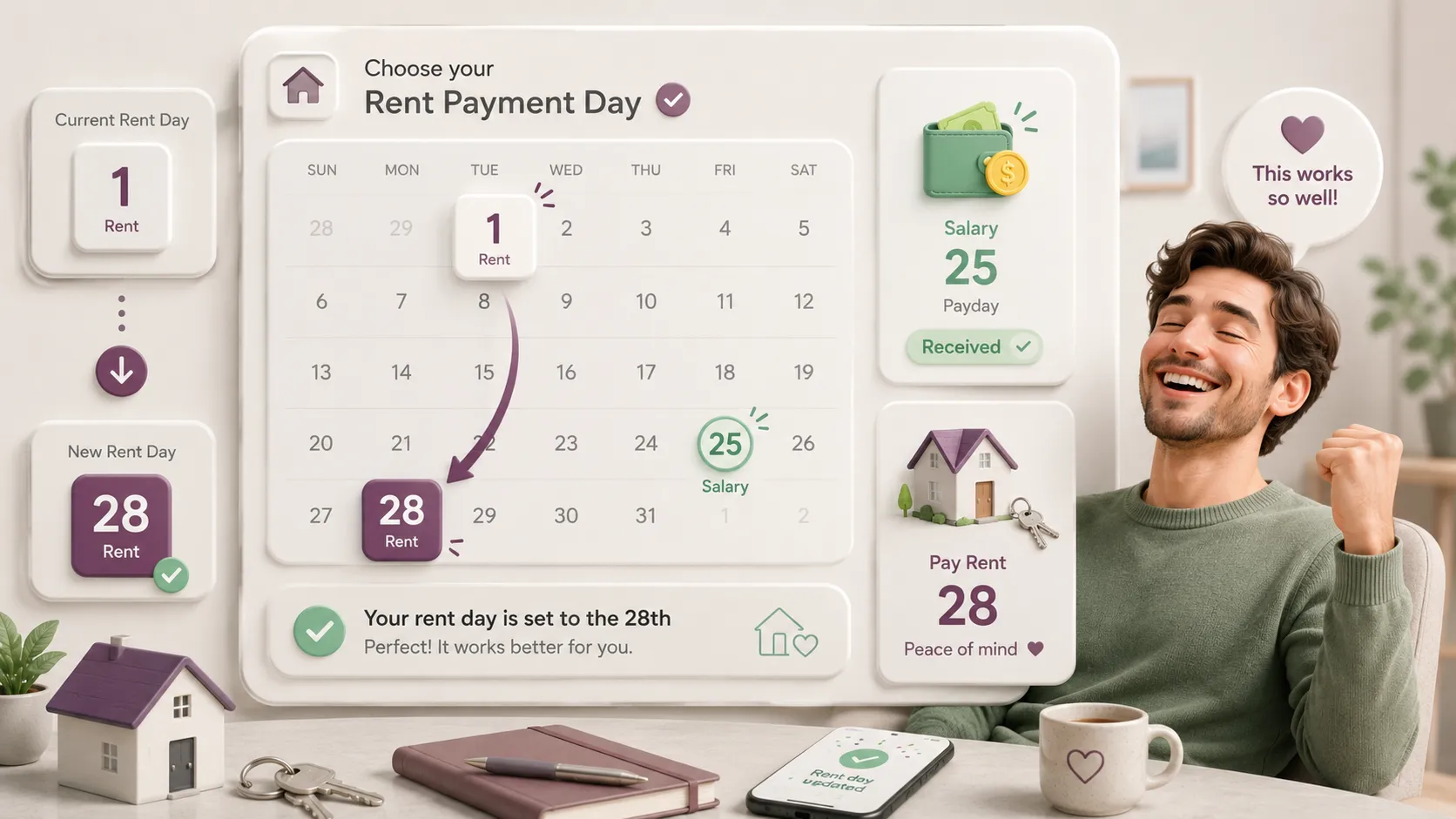
This is exactly the gap Rently is trying to solve with its Delay Rent Payments service. Tenants can choose a later payment date that better matches their salary cycle, while Rently transfers the full rent to the landlord on the original due date. According to Rently, tenants may defer rent by up to 29 days, fees start from $1.50/day, and landlords still receive the full rent on the official due date by 3PM Singapore time. (Rently)
But before we talk solutions, let’s talk about what really happens when rent is late in Singapore.
Paying rent late in Singapore is not “just a few days”
From a tenant’s point of view, late rent may feel like a small timing issue.
“I’m not refusing to pay. I just need three more days.”
From a landlord’s point of view, it can feel like the first crack in the relationship.
“Will this happen again next month? Is the tenant in financial trouble? Should I be worried?”
That tension matters because renting in Singapore is mostly governed by the tenancy agreement. SingaporeLegalAdvice explains that a tenancy transfers an interest in land to the tenant for a term at an agreed rent, and the duties of landlord and tenant are usually found in the tenancy agreement. A breach of those terms can potentially lead to termination and legal remedies. (SingaporeLegalAdvice.com)
In plain English: your tenancy agreement is not just paperwork. It is the rulebook.
And rent due dates are usually one of the clearest rules inside it.
PropertyGuru notes that Singapore tenancy agreements typically state the rent due date and grace period, with many agreements allowing around 7 days before late-payment interest may apply. The exact consequence depends on the contract you signed. (PropertyGuru)
So yes, some landlords may tolerate a short delay.
But legally and relationally, late rent is rarely neutral.
The legal consequences of paying rent late in Singapore
Let’s separate fear from fact.
Paying rent one day late does not automatically mean your landlord can throw your belongings outside and change the locks. But if rent remains unpaid, the situation can escalate.
A Singapore tenancy agreement may allow the landlord to terminate the tenancy, re-enter the premises, forfeit the deposit, or sue for unpaid rent if the tenant fails to pay within the period stated in the agreement. Lions Chambers describes late or non-payment of rent as a common breach and notes that agreements often allow re-entry, termination, deposit forfeiture, and civil claims. (Lions Chambers LLC)
One serious remedy is a writ of distress. SingaporeLegalAdvice explains that this is a court order allowing a sheriff to enter the property, seize the tenant’s possessions, and sell them to cover unpaid rent. A landlord can use it to claim up to 12 months of unpaid rent from the date of application. (SingaporeLegalAdvice.com)
That is the extreme end of the road.
Most cases do not start there. They start with a message.
Then a reminder.
Then an agent gets involved.
Then the trust starts leaking out of the relationship.
The emotional cost: the shame spiral nobody puts in the tenancy agreement
The tenancy agreement can describe late fees.
It cannot describe the feeling.
The feeling of typing: “Hi, sorry, can I pay rent next week?”
The feeling of seeing blue ticks and no reply.
The feeling of calculating whether you should delay groceries, your credit card bill, your family support, or rent.
The emotional cost of late rent is not just financial stress. It is identity stress. Many tenants who pay late are not irresponsible. They are salaried people trapped between two calendar dates: rent due date and salary credit date.
That mismatch can make a good tenant look unreliable.
And once that label appears, everything becomes harder.
The landlord reads future messages differently. The tenant becomes more defensive. The agent becomes more transactional. A home starts to feel like a probation period.
Reddit shows the real tension: tenants feel powerless, landlords feel exposed
Reddit is full of Singapore rental stories that show how quickly a housing relationship can turn sour.
One tenant in r/askSingapore described leaving the country and asking whether the landlord could deduct the last month’s rent from the deposit. The agent said no, and later the tenant wrote: “Currently they are just not responding at all - absolute radio silence.” (Reddit)
Another Reddit discussion shows the landlord side of the deposit question. A commenter said they had allowed tenants to use the deposit as last month’s rent, but another warned: “Deposit should not be used as last month rent payment.” The reason? If there are damages after handover, the landlord may have nothing left to recover from. (Reddit)
That is the conflict in one sentence.
The tenant sees the deposit as money already paid.
The landlord sees the deposit as protection.
Both feel correct.
Both can be correct.
And that is why late rent becomes so explosive. It is never only about the rent. It is about risk.
The tenant perspective: “I’m not trying to cheat anyone”
Most tenants who pay rent late are not trying to game the system.
They are trying to survive the calendar.
Maybe the rent is due on the 1st, but salary arrives on the 7th.
Maybe they just changed jobs and the first payroll date moved.
Maybe bills, subscriptions, insurance, family obligations, and rent all hit in the same week.
Rently’s own page captures this exact situation: “Your account will have money — it just won’t have it yet.” It also points to common scenarios like multiple payments competing in the same week and new jobs with new pay cycles. (Rently)
That line matters because it reframes the issue.
The problem is not always affordability.
Sometimes the problem is timing.
But landlords do not always see timing. They see non-payment.
That is why tenants should never disappear. Silence is what turns a manageable delay into a trust crisis.
A tenant who communicates early, shows proof where appropriate, and gives a specific payment date is in a much stronger position than a tenant who goes missing for four days and replies with “sorry busy.”
The landlord perspective: “I also have bills to pay”
Now let’s sit on the other side of the table.
The landlord may have a mortgage. Maintenance fees. Property tax. Insurance. Agent fees. Repairs. A family member depending on rental income. A previous bad experience with a tenant who promised payment “next week” and then disappeared.
So when rent is late, the landlord is not always being heartless.
They may be protecting themselves.
Late rent creates uncertainty. Uncertainty creates defensive behaviour. Defensive behaviour creates colder communication.
And if the tenant asks to use the deposit as rent, the landlord may hear: “I want to remove your safety net before you have inspected the property.”
That is why some landlords react strongly.
Not because they want drama.
Because from their perspective, late rent can be the first sign of a larger default.
The relational consequence: late rent changes the atmosphere of the home
There is a legal relationship.
Then there is the human relationship.
Late rent damages the second one first.
Before anyone files anything, the tone changes.
The landlord starts sending reminders earlier. The agent becomes less friendly. The tenant feels watched. Small repair requests become awkward. Deposit negotiations become tense. Handover becomes suspicious.
A Reddit thread about landlord-tenant rules in Singapore shows how emotionally charged renting can already be, even without late rent. One poster listed rules like “no cooking allowed,” “curfew by 10pm,” and a landlord converting the living room into a bedroom. Another commenter tried to show the other side, saying no cooking can be reasonable because of fire risk, mess, and odours. (Reddit)
That is the rental relationship in miniature.
A tenant wants to live normally.
A landlord wants to protect the property.
Rent arriving late pours petrol on that already delicate arrangement.
What should tenants do if they might pay rent late?
First, check your tenancy agreement. Look for the rent due date, grace period, late interest clause, default clause, and termination clause.
Second, communicate before the due date. Do not wait for the landlord to chase.
Third, be specific. “I can pay on 7 June” is better than “soon.”
Fourth, avoid treating the security deposit as your final month’s rent unless the landlord clearly agrees in writing. The Reddit debate above shows why this is such a flashpoint: tenants may see it as practical, while landlords may see it as losing protection against damage. (Reddit)
Fifth, solve the timing mismatch before it becomes a dispute.
That is where a service like Rently can help. Instead of asking the landlord for a favour every month, tenants can choose a later date that matches their cash flow. Rently says it pays the landlord on the original due date, then collects the rent plus a flat fee from the tenant on the chosen deferred date. (Rently)
The key benefit is not just financial.
It is relational.
The landlord gets predictability.
The tenant gets breathing room.
Nobody has to send the awkward message.
What should landlords do when rent is late?
Start with the agreement, not emotion.
Check the clause. Check the grace period. Send a written reminder. Keep records. Ask for a clear payment date. If the delay repeats or the tenant becomes unresponsive, seek proper legal advice before taking action.
Do not assume every late payment is malicious.
But do not ignore patterns either.
There is a difference between a tenant whose salary date is badly aligned and a tenant who repeatedly avoids communication.
One is a cash-flow mismatch.
The other is a risk signal.
The better question: why is rent so rigid when salary is not?
The rent system still assumes everyone gets paid before rent is due, with enough buffer to absorb every bill in the same week.
But modern life does not work that neatly.
People change jobs. Payroll dates shift. Freelancers get paid late. New arrivals to Singapore face huge upfront costs. Even stable salaried workers can be squeezed by timing.
The question is not whether tenants should pay rent.
Of course they should.
The question is whether the rental system should punish good tenants for having the wrong payday.
Rently’s Delay Rent Payments product is one answer: tenants can select a later date, Rently pays the landlord on the contractual due date, and the tenant pays Rently on the chosen date. Rently states that this helps tenants reschedule rent payments around salary credit days and comes at no cost to landlords. (Rently)
That is the real unlock.
Not “pay rent late.”
Pay rent on time to the landlord — while letting the tenant choose a calendar date that makes sense.
Final word: late rent is rarely just late rent
Late rent in Singapore can lead to late fees, deposit disputes, termination, legal claims, and in serious cases, enforcement action such as a writ of distress. But before any of that, it creates something more immediate: fear.
The tenant fears losing the home.
The landlord fears losing control.
The agent fears being trapped between both.
And the relationship becomes a negotiation under stress.
The fairest rental experience is not one where tenants can ignore due dates. It is one where reliable tenants are not punished by a calendar mismatch.
Because sometimes the money is there.
It just arrives on the wrong day.