Co-living in Singapore has become a popular option for tenants who want a furnished home, flexible lease arrangements and a smoother move-in experience. It is particularly appealing to international students, work pass holders, young professionals and people who have recently moved to Singapore.
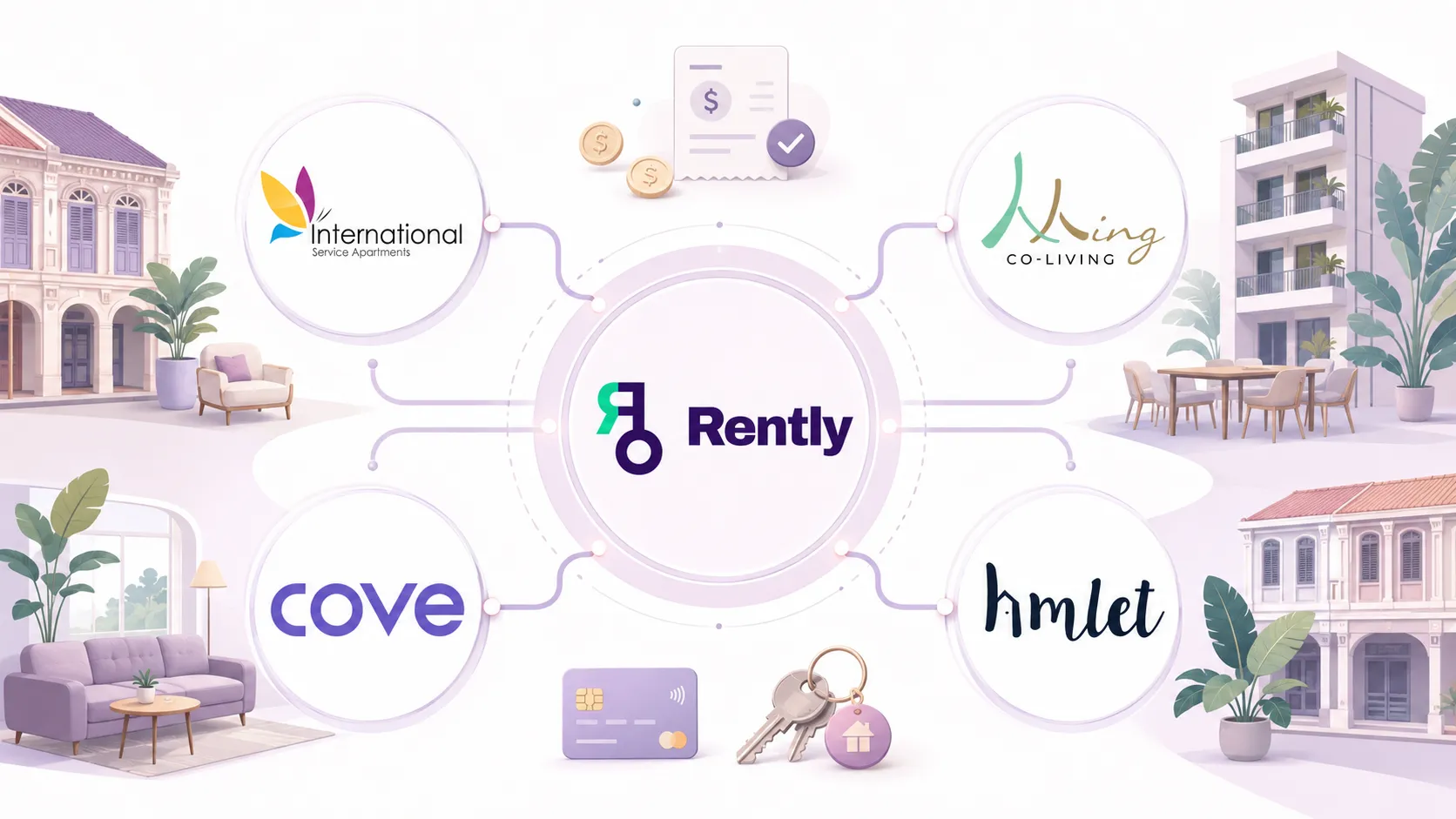
Platforms such as Hmlet, Cove, HSH, ISApartments and Ming Coliving make it easier to find rooms and apartments without furnishing an entire home or managing every household detail independently.
However, co-living tenants still face some of the same financial challenges as other renters. Moving in can require a large deposit, rent may be due before payday, and monthly rent payments do not usually generate any credit card rewards.
Through Rently, tenants renting from participating co-living platforms can access more flexible ways to manage these costs. Depending on the co-living provider and the tenant’s eligibility, this can include:
Paying rent by credit card and earning the usual rewards offered by the card issuer
Choosing a later rent payment date
Splitting the security deposit into monthly payments
Managing rent through a simpler digital process
Reducing the amount required at the beginning of a new tenancy
These services are designed specifically for individual residential tenants. They give co-living renters more control over when and how they pay without changing the convenience that attracted them to co-living in the first place.
Key Benefits for Co-Living Singapore Tenants
Pay co-living rent by credit card
Rent is often a tenant’s largest monthly expense, but a standard bank transfer generally does not earn credit card rewards.
With Rently, eligible tenants at participating co-living platforms can pay their monthly rent by credit card. Depending on the card and its issuer’s terms, tenants may earn their usual credit card miles, points or cashback on the transaction.
This can be useful for tenants who already use a rewards card for everyday spending. Instead of rent sitting outside their rewards strategy, an eligible co-living rent payment may contribute towards benefits such as airline miles, hotel points or cashback.
Credit card rewards are determined by the card issuer and are not guaranteed by Rently. Tenants should check their card’s rewards terms, eligible transaction categories and processing fees before choosing this payment method.
Additional HeyMax Max Miles are not currently available through co-living partner payments. This extra rewards feature is coming soon for participating co-living partners. Until then, tenants paying by credit card can still earn the usual rewards provided directly by their eligible credit card.
Delay a co-living rent payment when payday does not match the due date
A common challenge for co-living renters is a mismatch between the rent due date and their salary date.
For example, rent may be due on the first day of the month while a tenant’s salary only arrives on the fifth or seventh. This can be especially common for work pass holders starting a new job, employees changing companies or international tenants adjusting to a new payroll schedule.
Rently’s Delay Rent Payments service lets eligible tenants select a later payment date, up to 29 days after the original rent due date. The scheduled rent is paid on its original due date, while the tenant pays Rently on the date they selected, together with the applicable service fee.
This can help when:
Your rent is due before your monthly salary arrives
You recently changed jobs and now have a different payday
Several large bills fall within the same week
Relocation expenses have reduced the amount available in your account
You are waiting for a salary reimbursement or another confirmed incoming payment
You want your recurring rent payment to follow a more convenient monthly schedule
Fees start from S$1.50 per day for every S$1,000 of rent. Tenants can use the calculator on the Rently Delay Rent page to estimate the cost before applying.
Split your co-living deposit into monthly payments
Moving into co-living accommodation can still involve significant upfront costs. A tenant may need to cover the first month’s rent, a security deposit, relocation expenses and other essential purchases at around the same time.
For an international student or someone arriving in Singapore for a new job, these expenses can occur before the first salary or allowance has been received. Even tenants with stable income may prefer not to tie up a large amount of money in a security deposit immediately after moving.
Rently’s Lower Move-in Costs service allows eligible tenants to pay their deposit over time instead of paying the entire amount upfront.
Once the application is approved, Rently transfers the full security deposit required for the tenancy. The tenant can then move in with the first month’s rent and the applicable monthly deposit payment, rather than having to provide the full deposit at once.
This can be particularly helpful for tenants who need to manage:
Airfare and relocation costs
Immigration, visa or work pass expenses
University fees and study-related costs
Temporary accommodation before moving in
Furniture, household items or personal essentials
Overlapping rent between a previous home and a new co-living room
A deposit that has not yet been returned from a previous tenancy
Tenants can estimate their upfront and monthly costs using the calculator on the Lower Move-in Costs page.
What Does the Rently and Co-Living Singapore Collaboration Mean for Tenants?
Co-living platforms simplify the process of finding and moving into a furnished room or apartment. Rently complements that experience by giving eligible tenants more flexibility around rent and deposit payments.
Instead of having only one way to pay, a tenant at a participating co-living platform may be able to select the Rently feature that addresses their specific situation.
For example:
A miles collector may choose to pay co-living rent by credit card and earn the card’s usual rewards.
A work pass holder whose salary arrives after the rent due date may choose a later payment date.
An international student facing several move-in expenses may split the deposit into monthly payments.
A young professional relocating to Singapore may combine lower upfront costs with a rent date that follows their salary cycle.
The purpose is not to make tenants use every feature. It is to give them more choice when the standard rent schedule does not fit their circumstances.
Availability may vary by co-living platform, property and tenant eligibility.
Paying Co-Living Singapore Rent by Credit Card
Tenants commonly search for ways to pay rent by credit card in Singapore because monthly rent can represent a large amount of otherwise unrewarded spending.
Through participating co-living providers, Rently can process eligible rent payments by credit card. The tenant pays the rent and applicable processing fee using their selected card, and the rent payment is handled according to the agreed monthly schedule.
The potential benefit depends on:
The card’s miles, points or cashback earn rate
Whether the card issuer awards rewards for the transaction
Any spending caps or exclusions applied by the issuer
The value of the rewards to the tenant
The applicable card processing fee
Before paying co-living rent by credit card, tenants should compare the expected rewards against the fee. This is particularly important for cards with monthly bonus caps or exclusions for certain recurring payments.
For co-living partner payments, tenants can currently earn the usual rewards offered by their eligible credit card. Card payments do not earn Max Miles.
Delaying Rent for Co-Living in Singapore
Co-living is often chosen for flexibility, but the rent due date may still be fixed. This can create pressure when a tenant’s income arrives later in the month.
With Rently, an eligible tenant can choose a new payment date before the following month’s rent becomes due. Rently handles the scheduled payment on the original date, and the tenant pays Rently on their selected date.
The process is designed for temporary timing mismatches, such as:
Receiving a salary on the seventh when rent is due on the first
Starting a new job with a different payroll cycle
Managing several essential payments immediately after relocating
Needing a few additional days during an unusually expensive month
The tenant selects the preferred date, reviews the applicable fee and completes the required checks. Once approved, the payment follows the confirmed schedule.
Learn more and calculate the estimated fee on the Delay Rent Payments page.
Lowering Upfront Costs When Moving Into Co-Living Singapore
One of the main reasons tenants choose co-living is to make moving easier. Rooms are generally furnished, utilities may be organised, and tenants do not need to set up an entire home independently.
However, paying a security deposit and the first month’s rent together can still make the initial cost difficult to manage.
Rently allows eligible tenants with an upcoming residential tenancy to split the deposit cost into monthly payments. This reduces the amount needed at the beginning of the stay and lets tenants retain more of their available money for relocation, education, transportation and daily expenses.
The process can be particularly relevant for tenants who have found a suitable co-living room but do not want the timing of a large deposit to prevent them from moving.
Applications are subject to assessment, and approval is not guaranteed. Tenants will need to provide the required identity, income and tenancy information.
See how the monthly payment could work using Rently’s Lower Move-in Costs calculator.
How Rently Works for Co-Living Singapore Tenants
The exact process may vary depending on the participating co-living platform and the selected service. In general, tenants can expect to:
Confirm their personal and tenancy details.
Provide the required identity and income information.
Add the details of their co-living tenancy.
Choose an available feature, such as credit card rent payment, Delay Rent Payments or Lower Move-in Costs.
Upload the requested supporting documents.
Review the payment schedule and applicable fees.
Submit the application for assessment.
Complete the setup after approval.
All fees and payment details should be reviewed before confirming an application.
Who Can Benefit From Rently for Co-Living Singapore?
Rently’s co-living payment features may be especially useful for:
International students moving to Singapore for university or further education
Employment Pass, S Pass and other eligible work pass holders
Professionals relocating to Singapore for a new role
Young professionals who prefer furnished, community-oriented accommodation
Interns and graduate employees beginning their careers in Singapore
Local tenants moving out independently for the first time
Couples or individuals looking for a simpler move-in experience
Tenants whose salary date does not match their rent due date
Credit card users who want their eligible rent payments to earn card rewards
Renters who want to reduce the deposit amount payable at the beginning of a tenancy
People changing homes while waiting for a previous security deposit to be returned
Eligibility depends on the Rently service selected and the information provided during the application.
Why Flexible Payments Matter for Co-Living Singapore Renters
Co-living tenants often move because of a major life change: starting university, accepting a new job, arriving in Singapore, changing employers or moving out on their own.
These transitions can create several expenses at once. A tenant may be financially prepared for the monthly rent but still face difficulty because the deposit is due immediately or the rent date falls just before payday.
Flexible payment options can make these transitions easier to manage:
Credit card payments can turn eligible rent spending into the card issuer’s usual rewards.
Delay Rent Payments can align rent with a salary or allowance date.
Lower Move-in Costs can reduce the amount needed before moving in.
For tenants, the benefit is straightforward: more control over the timing and method of paying for their home.
Looking Ahead for Co-Living Singapore Tenants
The collaboration between Rently and participating co-living platforms brings together two parts of the rental experience.
Co-living providers such as Hmlet, Cove, HSH, ISApartments and Ming Coliving help tenants find furnished accommodation and settle into Singapore. Rently gives eligible tenants additional ways to manage the financial side of moving in and paying rent.
Tenants can choose the feature that best matches their needs: paying rent by credit card, moving the payment date or splitting the deposit into monthly payments.
Credit card users can continue earning the usual rewards offered by their eligible card issuer. Additional HeyMax Max Miles for participating co-living partners are coming soon.
Make Your Co-Living Singapore Payments More Flexible With Rently
If you are renting from a participating co-living platform in Singapore, Rently may help you manage your rent and deposit in a way that better fits your schedule.
You can:
Pay eligible rent by credit card and earn your card’s usual rewards
Choose a later date to pay rent
Split your deposit into monthly payments
Reduce the amount required when moving into a new home
Explore Lower Move-in Costs or learn how to delay your rent payment by up to 29 days.